


 Back to blog
Content Moderation Companies: Best Options for Trust & Safety Teams

 CEO of Label Your Data


Table of Contents

- TL;DR
- Benefits of Content Moderation Outsourcing
- Label Your Data
- TaskUs
- TELUS Digital
- ModSquad
- Concentrix
- TP (Teleperformance)
- Hive
- Alice (formerly ActiveFence)
- Microsoft Azure AI Content Safety
- Besedo
- Top Content Moderation Companies Compared
- How to Choose a Content Moderation Company
- Content Moderation Outsourcing Trends in 2026
- About Label Your Data
- FAQ

TL;DR
- Content moderation companies include managed providers, AI-data partners, software/API vendors, and threat-intelligence platforms.
- Label Your Data fits AI teams that want managed human review plus labeled data for model training or safety evaluation.
- TaskUs, TELUS Digital, ModSquad, Concentrix, TP, and Besedo combine human operations with automation at different scales.
- Hive and Microsoft Azure AI Content Safety are software-first; Alice combines adversarial intelligence, SaaS tooling, and specialist analysts.
- A useful vendor pilot tests policy accuracy, escalation quality, language coverage, reviewer QA, security, and production pricing.
A vendor shortlist can look sensible and still compare content moderation companies that solve different problems.
TaskUs sells managed Trust & Safety operations. Azure AI Content Safety sells an API. Alice focuses on threat intelligence. Label Your Data connects managed content moderation services with AI training and model evaluation workflows.
This guide compares 10 providers by delivery model, human-review capability, automation, multilingual reach, and fit for AI training data work or model evaluation. It also covers the benefits of content moderation outsourcing, the checks worth running during procurement, and the key trends affecting moderation programs in 2026.
Benefits of Content Moderation Outsourcing
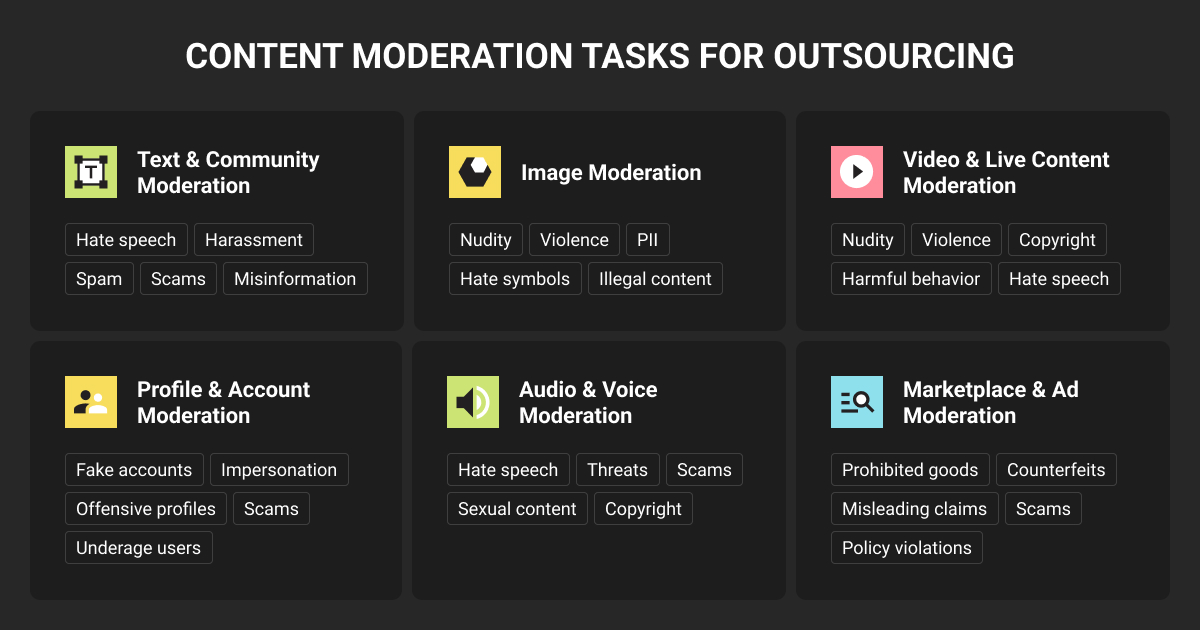
Content moderation outsourcing gives teams access to trained reviewers, additional capacity, regional knowledge, and established QA processes without building the whole operation internally.
However, your team still needs to own the policy. The provider executes that policy, reports on decisions, and escalates cases that need internal judgment.
How content moderation companies absorb spikes
Outsourcing content moderation makes variable review volume easier to staff.
A product launch, livestream, seasonal campaign, or abuse event can push queues far beyond normal levels. Keeping enough permanent headcount for those peaks is expensive. A managed content moderation service provider can adjust reviewer capacity around the workload, assuming the contract and training model support fast ramping.
For Trust and Safety AI teams, total headcount says less than the provider’s ability to ramp trained reviewers quickly.
When outsourcing content moderation adds context
Regional expertise matters when a moderation policy decision depends on language, slang, coded abuse, or local context.
A literal translation rarely captures everything a moderator needs to know. The harder question is whether reviewers understand how the same phrase, meme, or symbol changes meaning across communities.
For multilingual programs, ask content moderation service providers how they recruit native or near native reviewers, calibrate policy decisions across markets, and escalate ambiguous cases.
What content moderation service providers add beyond people
Content moderation outsourcing companies often provide the operational layer around human review as well.
That can include reviewer training, QA sampling, calibration sessions, escalation workflows, wellness support, and reporting. Content moderation outsourcing agencies package these functions differently, so buyers should compare the actual operating model rather than the vendor category alone.
Let’s compare the best AI content moderation companies 2026 by how they handle human review, automation, and operational support, and see which vendor fits your moderation workflow.
Label Your Data
Label Your Data is a specialist, human-in-the-loop moderation partner for AI and data-driven teams, with 1,000+ teammates across 22 countries. It connects content moderation services with expert data annotation services, model training, and evaluation, making it a more versatile fit for AI teams than providers focused mainly on community or platform moderation.
Unlike software-first vendors, Label Your Data adds human judgment, policy interpretation, human QA, and edge-case review. Compared with large BPO providers, it offers a more focused and flexible engagement model for teams that need managed moderation without a massive outsourced setup.
Real-world projects show where this cooperation model works best. Guardrails AI, an AI safety software company, needed training data for filters that detect unapproved financial advice and factual errors. Label Your Data labeled 1,000 sentences and extracted 5,764 factual claims in 3.5 weeks with zero rework. The labels were used to train open-source safety filters for hallucination and advice detection, helping speed up the release of new validators in Guardrails Hub.
In another project, Technological University Dublin needed linguistically informed annotation for propaganda detection in news content. Label Your Data delivered an annotated text corpus, analyzed where human annotators and ChatGPT disagreed most, and found stronger reliability from human annotators for this nuanced task.
These projects show that Label Your Data fits best in workflows where human judgment and QA turn reviewed content into structured data for model training, evaluation, or safety improvement.
TaskUs
TaskUs is a large content moderation outsourcing provider with a dedicated Trust & Safety practice. Its services go beyond queue review to include platform integrity, child safety, policy support, QA, escalation handling, and moderator wellness.
The company is a stronger fit for large platforms that need moderation as part of a broader Trust & Safety operation rather than as a standalone review function. TaskUs also combines human review with automation, which can help manage high content volumes while keeping complex cases with people.
For procurement teams, the main questions are how quickly TaskUs can ramp trained reviewers, which markets receive dedicated language coverage, and how much capacity is assigned to the account.
TELUS Digital
TELUS Digital, formerly TELUS International, combines content moderation outsourcing with AI data and training services. That overlap makes it relevant for teams that need moderation work to connect with model training, evaluation, or policy reasoning.
Its services include human review, QA, escalation handling, and support for moderation models. In one project, TELUS Digital worked on a moderation LLM that struggled with evasive policy violations and used structured reasoning examples to improve contextual policy analysis.
For AI teams, this makes TELUS Digital worth considering when moderation data needs to support both platform enforcement and model improvement. Buyers should still confirm language coverage, delivery locations, and how moderation data can be reused in AI workflows.
ModSquad
ModSquad provides outsourced moderation, community management, and customer support through a distributed workforce. Its moderation services cover text, images, video, audio, and live content, with automation handling part of the workflow before people review cases that need judgment.
The company is particularly relevant for gaming, entertainment, social platforms, and online communities where moderation overlaps with day-to-day community operations. Its distributed model also supports flexible coverage across regions and time zones.
Yet, trust and safety AI teams should verify whether reviewer capacity is dedicated or shared, how deeply moderators are trained on platform-specific policies, and how quickly the team can scale during launches, events, or sudden traffic spikes.
Concentrix
Concentrix runs large-scale Trust & Safety programs that combine human moderation with AI and automation. Its services cover multilingual content review, platform integrity, regulatory operations, live safety support, and related AI data work.
The company is best suited to large platforms that need substantial reviewer capacity across multiple markets. Concentrix also describes a multilingual moderation program for a leading short video platform, where it recruited 1,800 moderators in India and Jordan based on language capability, cultural awareness, resilience, speed, and accuracy.
That scale is useful, but procurement teams still need account-level detail. Ask how reviewers are allocated by market, how escalation works, and whether smaller language or policy categories receive dedicated expertise.
TP (Teleperformance)
TP provides enterprise-scale Trust & Safety services for user-generated and AI-generated content, including moderation, appeals, policy operations, and AI safety work.
Its strength is operational scale, which makes it relevant for platforms processing very high volumes across multiple markets. TP also brings large-scale moderation operations, with 43,000 Trust & Safety team members, 2.3 billion pieces of content reviewed annually, and support for 50+ languages across 36+ countries.
For buyers, scale alone should not drive the final decision. Ask which harm categories TP currently supports, how reviewers are trained for policy-heavy work, and whether the delivery model fits your volume. Teams handling severe or highly sensitive content should also confirm the current scope directly during procurement.
Hive
Hive is a software-first moderation provider built around machine learning rather than a large outsourced reviewer workforce. Its moderation APIs process visual content, text, OCR-extracted text, and speech, which makes Hive more relevant to product teams that want moderation embedded directly into an application.
Their Chatroulette case study reported a sharp reduction in inappropriate content after Hive was integrated into the platform, along with much faster detection and removal of unsafe streams.
Hive can also support manual review in selected workflows, but the main buying decision is still technical. Teams should test its models against their own policy categories, edge cases, languages, and latency requirements before treating it as a replacement for managed human moderation.
Alice (formerly ActiveFence)
Alice, formerly ActiveFence, focuses on threat intelligence, adversarial risk detection, and safety infrastructure rather than traditional outsourced moderation at BPO scale.
Its platform monitors large volumes of signals across languages to identify harmful activity, coordinated abuse, and emerging threats. Specialist analysts add context where automated detection alone is not enough.
This makes Alice a different type of provider from companies that primarily supply human moderators. It is more relevant when the problem is identifying new abuse patterns, building custom safety controls, or strengthening an existing Trust & Safety stack.
Teams looking for ongoing human queue review should confirm how much operational moderation Alice provides versus intelligence, tooling, and specialist analysis.
Microsoft Azure AI Content Safety
Microsoft Azure AI Content Safety is a developer-facing moderation service rather than a content moderation outsourcing company. It provides APIs and safety controls for detecting harmful text and images and for managing risks in generative AI applications.
Its features include content classification, Prompt Shields, groundedness detection, protected material detection, blocklists, and custom categories. The main advantage is direct integration into an AI or application workflow.
The limitation is operational. Azure does not provide a built-in managed moderation workforce for policy interpretation, appeals, or human escalation. Trust and safety teams that need those functions must build them internally or combine Azure with a human-led moderation service provider.
Besedo
Besedo combines moderation software with human review and has a long history in marketplaces, dating apps, and online communities. Its services cover automated moderation, APIs, tagging, localization, and human review for cases that need more context.
That makes Besedo a useful option for products where moderation is closely tied to community health and user-generated content (UGC) operations. In its Connected2Me case study, Besedo reported an 80% reduction in support requests related to harmful content after implementation.
For procurement teams, the key questions are how deeply Besedo can adapt to a custom policy taxonomy, which languages receive strong human coverage, and how the human review layer works when automated moderation is uncertain.
Top Content Moderation Companies Compared
Use the table below to narrow your content moderation vendor shortlist before you move into demos or pilots.
Here, we compared the best content moderation outsourcing companies by service model, human review, automation, threat intelligence, and typical use case, so you can quickly see which options match your moderation workflow and avoid spending time on vendors built for a different kind of problem.
| Company | Service model | Human review | Best for | What to validate |
| Label Your Data | Managed moderation + AI training data services | Yes | AI training, evaluation, and human-in-the-loop moderation | Need for a dedicated moderation API |
| TaskUs | Managed Trust & Safety | Yes | Large-scale moderation operations | Ramp time, delivery locations, dedicated capacity |
| TELUS Digital | Managed moderation + AI data | Yes | Multilingual moderation tied to AI workflows | Data ownership, locations, SLA |
| ModSquad | Distributed managed moderation | Yes | Gaming, communities, social platforms | Dedicated vs. shared capacity |
| Concentrix | Enterprise Trust & Safety | Yes | Large multilingual programs | Market-level staffing, escalation design |
| TP | Enterprise Trust & Safety | Yes | High-volume moderation and appeals | Severe-harm scope, account setup |
| Hive | Moderation API + optional review | Optional | Low-latency automated moderation | Policy fit, languages, review SLA |
| Alice | Threat intelligence + SaaS | Specialist analysts | Emerging threats and adversarial abuse | Human review scope |
| Azure AI Content Safety | Safety API | No built-in team | AI app and LLM safety controls | Human escalation and policy ops |
| Besedo | Platform + managed review | Yes | Marketplaces, dating, communities | Custom policy depth, language coverage |
How to Choose a Content Moderation Company
Choose content moderation service providers against the workflow you need to operate in production.
A vendor demo can show strong detection accuracy and still leave major gaps around appeals, reviewer escalation, language coverage, or incident response. Those gaps usually appear after launch, when changing the operating model becomes way harder.
Match the provider type to the workload
Define which part of content moderation you need for your model or platform safety.
If you need experts to review queues, apply policy, and handle escalations, evaluate managed service providers like Label Your Data. If the product team needs low latency classification inside an application, an API may be enough. Threat intelligence tools solve a different problem, such as finding abuse patterns before your existing rules catch them.
For image heavy products, tes timage recognition against actual policy violations and edge cases from your platform.
Test the automation boundary
Ask exactly which decisions automation makes and which ones reach a person.
A machine learning algorithm can triage or classify large volumes quickly, but procurement teams need to know the confidence thresholds, override rules, fallback process, and escalation path.
The pilot should include difficult or edge-case examples. Use coded abuse, euphemisms, policy exceptions, multilingual cases, and content that previously caused disagreement inside your own content moderation team.
Check what happens to moderation data
Moderation decisions become more valuable when teams preserve the labels, rationale, and QA history behind them.
Reviewed moderation data can also become useful machine learning datasets when the workflow preserves labels, policy rationale, and QA history. If the same reviewed content will also support data annotation, ask whether the provider can export taxonomy versions, reviewer decisions, adjudication results, and confidence metadata.
Then price the production workflow. Hourly review, per item pricing, software fees, minimum commitments, and data annotation pricing can produce very different costs once volume moves beyond the pilot.
A useful pilot measures policy accuracy, disagreement between reviewers, escalation quality, turnaround time, and error patterns by language or harm category. You can test these criteria on your own content moderation workflow with our no-cost pilot before committing to production volumes.
Content Moderation Outsourcing Trends in 2026
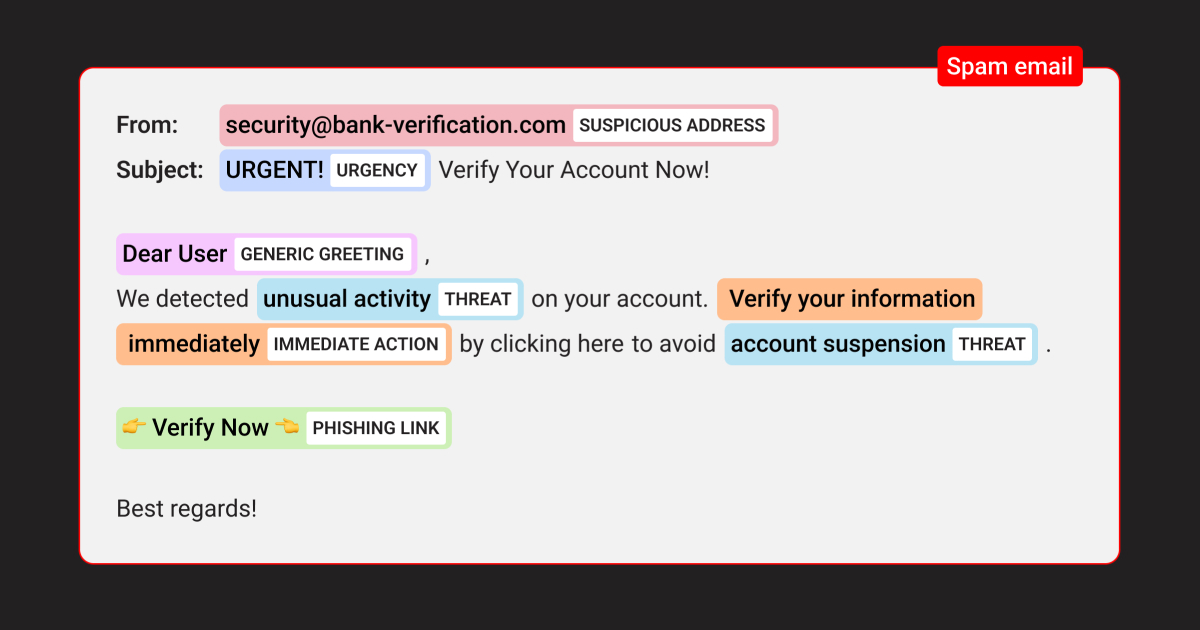
Content moderation outsourcing is moving beyond basic queue review. Teams are looking for providers that can combine human judgment with automation and handle AI-generated content. They also need clearer records of how moderation decisions are made as regulatory requirements tighten.
Human review remains part of moderation operations as automation expands. A 2025 TELUS Digital survey found that 65% of organizations used human involvement in content moderation, compared with 34% using technology only.
AI generated content also creates new transparency requirements. EU AI Act Article 50 transparency obligations started applying on August 2, 2026. They include requirements covering AI interactions and certain AI generated or manipulated content.
Content moderation programs also need stronger records of how decisions are made. The EU Digital Services Act requires transparency reporting on content moderation practices, including automated systems. In the UK, illegal content duties under the Online Safety Act require in scope services to assess and address illegal content. Separate child safety duties apply where children are likely to access the service.
For AI teams, there’s another practical consequence. Reviewed edge cases can become evaluation or retraining data when the moderation workflow preserves policy labels, reviewer rationale, and QA history.
These requirements make a strong case for content moderation partners that connect human review with structured QA and AI training data workflows. A data annotation company like Label Your Data can support that model.
About Label Your Data
If you choose to delegate content moderation, run a free data pilot with Label Your Data. Our outsourcing strategy has helped many companies scale their ML projects. Here’s why:
 Data Annotation for Complex Environments
Rely on consistent, high-quality output for complex datasets, detailed taxonomies, and edge cases.
 Structured Quality From Pilot to Production
Get quality engineered into every step through onboarding, evolving guidelines, QA, and continuous feedback.
 Flexible and Scalable Operations
Adjust team capacity, project size, and delivery model as you scale, with no setup fees or long-term lock-ins.
 An Integrated Delivery Partner
Align on goals, workflows, and expectations with a team that integrates into your process from day one.
 Projects Led by Annotation Experts
Work with former annotators who understand annotation complexity, quality standards, and high-volume delivery.
FAQ
Will content moderation be replaced by AI?
Not fully, at least not yet. AI handles volume well, but it still struggles with sarcasm, cultural context, and edge cases that need real judgment. Most platforms run AI and human reviewers together, and that's likely to stay the model for a while.
What does a content moderator do?
A content moderator reviews user-generated content, text, images, video, audio, and decides whether it violates platform policy. They remove or flag harmful content, handle appeals, escalate complex or high-risk cases, and apply policy consistently across different types of content.
Why do AI companies implement content moderation?
AI companies need content moderation to keep harmful, illegal, or policy-violating content off their platforms, protect users, and meet regulatory requirements like the EU's DSA. It also protects brand reputation and keeps AI systems themselves from generating or amplifying harmful content.
Written by
CEO of Label Your Data
Karyna is the CEO of Label Your Data, a company specializing in data labeling solutions for machine learning projects. With a strong background in machine learning, she frequently collaborates with editors to share her expertise through articles, whitepapers, and presentations.